

Advanced Computer
Course Overview:-
MXSII (https://mxsiitech.com/advanced-computer/) is listed as one of the highly reckoned and top-notch Computer institutes in Yamuna Nagar having a group of people who are expertise in the field of Computer courses. Here at MXSII, backed by the team of experts, we, offering the best Computer classes in Yamuna Nagar, is committed to bringing excellence in making Design a simple Computer Knowledge for everyday use. Being the most reputed center offering Computer courses in Yamuna Nagar, we aim to create a learning, interactive and fun environment as we believe if learners will enjoy their classes, only then they are more motivated to get progress in their studies.
Advanced Courses
- Advanced courses are not for everyone because you have to have some background in computers especially coding.
- If you want to be a programmer or designer then you should go for advanced courses because they are very technical.
- There are many advanced courses but we are mentioning some of them which you can do even if you have completed 10+2.
Designing and Publishing Web Pages
- You can start by designing and publishing web pages. You need to know various software developing kits like Visual basic or Dreamweaver where you learn how to design and publish a web page.
- You may also learn about coding that is needed for designing a web page.
- The field is vast and you have to choose one particular software development kit.
Adobe Photoshop
- Adobe Photoshop is all about designing stylish covers of a magazine or billboards.
- Adobe Photoshop is a very important software course because it can easily get you a job.
- However, learning desktop publishing is an art and you need years of experience before you can design a great cover.
- So I recommend you to learn Adobe Photoshop if you are interested in designing.
Web Coding – HTML, CSS
- Web Coding is actually about writing down codes. If you see your future as a software engineer then you can start with learning HTML and CSS & WordPress
- They are very basic of coding but as you graduate then you have to learn many things about programming.
- Later you will learn ASP.NET, JSP, etc.
Tally Courses
- If you come from a commerce background then you can join the Tally course.
- You learn a lot of things about auditing and accounting.
- So these were some of the advanced courses that you can learn. These courses are not that advanced like learning .NET or J2EE.
- But these courses might help you to learn other really advanced courses that are more technical than these.
Contact us, to Advanced learn Computer Course in just a few months, as all our experts follow proven methodologies while conducting the course and make sure that the requisite amount of attention is given to all students. Being the trusted name in this domain, our students come from all parts of Yamuna Nagar and Saharanpur, etc. and from many other parts of India and the world.
Course Summary
Our new concept in teaching Computer Language is unique and flexible which ensure perfect retention of content involving purely psychological and scientific methods. It is entirely different from the traditional and stress full way of school/college type of Advanced Computer learning.
- MXSII is an ISO 9001 : 2015 & MSME certified company and it is approved by the Ministry of Corporate Affairs.
- Students get a chance to appear in the Placement Drives of reputed and top organizations after successful completion of the training.
- MXSII’s training certificates are globally accepted and recognized.
- Trainers give individual attention to learners regarding their doubts and queries.
- Improved course content leads to smart learning and ultimately successful completion of the course.
- It also grants short term courses to boost the learning of technology in a short duration.
- Flexibility is provided for an opting for batch dates. Batch dates once selected may be changed prior to 7 days of starting the batch.
- After being a part of MXSII Family, students will be provided 1 Year Membership Card through which the candidate can revise the same course with a large number of other benefits.
- Grants academic learning environment due to positive and intellectual discussions with the experts and peer group.
- We have specially trained faculty to help you through your tenure with MXSII.

PTC CREO
Course Overview:-
MXSII (PTC CREO) is listed as one of the highly reckoned and top-notch CAD / CAM /CAE Institute in Yamuna Nagar having a group of people who are expertise in the field of 2D & 3D Designing. Here at MXSII, backed by the team of experts, we, offering the best CREO classes in Yamuna Nagar, are committed to bringing excellence in making 2D & 3D Design a simple Designing for everyday use. Being the most reputed center offering a Designing course in Yamuna Nagar, we aim to create a learning, interactive and fun environment as we believe if learners will enjoy their classes, only then they are more motivated to get progress in their studies.
MXSII TECH offers an advanced course in CREO, a leading parametric solid modeling software. Solid Works comes with engineering, design, and systems engineering capabilities.
CREO is a suite of software that provides 3D CAM/CAD/CAE software solutions. It was previously known as PRO ENGINEER. It was created by Parametric Technology Corporation (PTC) which supports product design for discreet manufacturers. The credit for marketing the feature-based solid modeling software goes to PTC, as it was first to market the product. CREO supports the following features:
. Used for solid modeling.
. Used for assembly modeling and Drafting.
. It provides parametric and direct modeling.
. Used for finite element analysis.
In addition to these features it finds implications in various industries like:
. Finds application in Engineering Design.
. It helps in the analysis of thermal, static, dynamic features which in turn helps to design the products.
. It consists of tools that execute the manufacturing process of molding, die-casting, and progressive tooling design.
When it comes to engineering, it enables rapid development of high-quality mechanical products. It empowers engineers to do digital prototyping, digital analysis and simulation to understand the quality and performance of product designs early in the product development phase.
Learning Objectives:-
Parametric solid modeling, free-form surface modeling, reverse engineering, styling, and computer-aided industrial design, engineering drawing and drafting, product and manufacturing information, reporting and analytics, verification and validation, knowledge-based engineering, reuse, sheet metal design, assembly modeling, digital mock-ups, simulation, stress analysis, finite element method, kinematics, complete fluid dynamics, thermal analysis.
Steps Required to Learn System VERILOG:-
In order to command the CREO (PRO E) training, students can prefer to learn through certain proven steps. These are some of the proven strategies which can help students for “effective and smart learning”. Some of the steps mentioned below are:
• Basic knowledge of computers is required.
• Good Knowledgebase in Design and modeling.
• Concepts related to TOM (Theory of Machines) should be clear and concise.
• There shouldn’t be any doubt in the concepts related to Engineering Graphics, Machine design as they form an integral part.
• Good analytical skills in implementing the concepts practically can turn an individual into a true expert professional.
Course Summary:-
Our new concept in teaching of Designing is unique and flexible which ensure perfect retention of content involving purely psychological and scientific methods. It is entirely different from the traditional and stress full way of school/college type of Designing.
- MXSII is an ISO 9001 : 2015 & MSME certified company and it is approved by Ministry of Corporate Affairs.
- Students get a chance to appear in the Placement Drives of reputed and top organizations after successful completion of the training.
- MXSII’s training certificates are globally accepted and recognized.
- Trainers give individual attention to learners regarding their doubts and queries.
- Improved course content leads to smart learning and ultimately successful completion of the course.
- It also grants short term courses to boost the learning of technology in short duration.
- Flexibility is provided for an opting for batch dates. Batch dates once selected may be changed prior to 7 days of starting the batch.
- After being a part of MXSII Family, students will be provided 1 Year Membership Card through which the candidate can revise the same course with large number of other benefits.
- Grants academic learning environment due to positive and intellectual discussions with the experts and peer group.
- We have specially trained faculty to help you through your tenure with MXSII.

IIT JEE MAINS
Course Overview:-
MXSII (IIT JEE MAINS) is listed as one of the highly reckoned and top-notch Entrance Exam Coaching Institute in Yamuna Nagar having a group of people who are expertise in the field of Entrance Exam. Here at MXSII, backed by the team of experts, we, offering the best Entrance Exams Coaching in Yamuna Nagar, is committed to bringing excellence in making Design a simple Entrance Exam for everyday use. Being the most reputed center offering Entrance Exam Coaching in Yamuna Nagar, we aim to create a learning, interactive and fun environment as we believe if learners will enjoy their classes, only then they are more motivated to get progress in their studies.
IIT JEE Syllabus
Know your IIT JEE Physics, Chemistry, and Mathematics Syllabus. To know more about IIT JEE Physics, Chemistry, and Maths Syllabus, Click the below tab. IIT-jee-mains
IIT JEE Syllabus: What to study?

How to use Syllabus for IIT JEE (Main) Preparation?
- The aspiring IIT JEE students need to go through the syllabus carefully as it tunes one’s mind to grab all the important aspects of the chapter in detail. JEE Course is basic to your preparation.
- It is very necessary to go through the chapter’s time-to-time to make sure that no important topic is left out.
- Students need to make sure that the syllabuses of all subjects are covered in time to avoid further clashes.
JEE Mains Syllabus
Chemistry Syllabus
|
Physical Chemistry |
||||
| Some Basic Concepts in Chemistry | States of Matter | Chemical Bonding and Molecular Structure | Chemical Thermodynamics | Solutions |
| Equilibrium | Redox Reactions and Electrochemistry | Chemical Kinetics | Surface Chemistry | Atomic Structure |
|
Inorganic Chemistry |
|||
| Classification of Elements and Periodicity in Properties | General Principles and Processes of Isolation of Metals | Hydrogen | S-Block Elements (Alkali and Alkaline Earth Metals) |
| P-Block Elements | d- and f- Block Elements | Coordination Compounds | Environmental Chemistry |
| Purification and Characterization of Organic Compounds | Some Basic Principles of Organic Chemistry | Hydrocarbons | Organic Compounds containing Halogens | Organic Compounds containing Oxygen |
| Organic Compounds containing Nitrogen | Polymers | Biomolecules | Chemistry in Everyday Life | Principles related to Practical Chemistry |
Physics Syllabus
|
Section B |
|
| Experimental Skills | NA |
Mathematics Syllabus
Course Summary:-
Our new concept in teaching of Entrance Exam Coaching is unique and flexible which ensure perfect retention of content involving purely psychological and scientific methods. It is entirely different from the traditional and stress full way of school/college type of learning.
- MXSII is an ISO 9001: 2015 & MSME certified company and it is approved by the Ministry of Corporate Affairs.
- Trainers give individual attention to learners regarding their doubts and queries.
- Improved course content leads to smart learning and ultimately successful completion of the course.
- It also grants short term courses to boost the learning of technology in a short duration.
- Flexibility is provided for an opting for batch dates. Batch dates once selected may be changed prior to 7 days of starting the batch.
- After being a part of MXSII Family, students will be provided 1 Year Membership Card through which the candidate can revise the same course with a large number of other benefits.
- Grants academic learning environment due to positive and intellectual discussions with the experts and peer group.
- We have specially trained faculty to help you through your tenure with MXSII.

IIT JEE ADVANCED
Course Overview:-
MXSII (IIT JEE ADVANCED) is listed as one of the highly reckoned and top-notch Entrance Exam Coaching Institute in Yamuna Nagar having a group of people who are expertise in the field of Entrance Exam. Here at MXSII, backed by the team of experts, we, offering the best Entrance Exams Coaching in Yamuna Nagar, is committed to bringing excellence in making Design a simple Entrance Exam for everyday use. Being the most reputed center offering Entrance Exam Coaching in Yamuna Nagar, we aim to create a learning, interactive and fun environment as we believe if learners will enjoy their classes, only then they are more motivated to get progress in their studies.
IIT JEE Syllabus
Know your IIT JEE Physics, Chemistry, and Mathematics Syllabus. To know more about IIT JEE Physics, Chemistry, and Maths Syllabus, Click the below tab.
IIT JEE Syllabus: What to study?
How to use Syllabus for IIT JEE (Advanced) Preparation?
- The aspiring IIT JEE students need to go through the syllabus carefully as it tunes one’s mind to grab all the important aspects of the chapter in detail. JEE Course is basic to your preparation.
- It is very necessary to go through the chapter’s time-to-time to make sure that no important topic is left out.
- Students need to make sure that the syllabuses of all subjects are covered in time to avoid further clashes.
JEE Advanced Syllabus
Chemistry Syllabus
|
Physical Chemistry |
||||
| General Topics | Gaseous and Liquid States | Energetics | Chemical Equilibrium | Electrochemistry |
| Chemical Kinetics | Solid State | Atomic Structure and Chemical Bonding | Solutions | Surface Chemistry |
| Nuclear Chemistry | ||||
|
Inorganic Chemistry |
|||
| Isolation/Preparation and Properties of the following Non-metals | Preparation and Properties of the following Compounds | Transition Elements (3D Series) | Preparation and Properties of the following Compounds |
| Ores and Minerals | Extractive Metallurgy | Principles of Qualitative Analysis | |
|
Organic Chemistry |
||||
| Basic Concepts | Preparation, Properties, and Reactions of Alkenes | Preparation, Properties, and Reactions of Alkenes and Alkynes | Reactions of Benzene | Phenols |
| Characteristic Reactions of the following (including those mentioned above) | ||||
| Alkyl halides | Alcohols | Ethers | Aldehydes and Ketones | Carboxylic acids |
| Haloarenes | Carbohydrate | Amino acids and peptides | Properties and uses of some important polymers | Practical organic chemistry |
Physics Syllabus
| General Concepts | Mechanics | Thermal Physics | Electricity and Magnetism |
| Electromagnetic Induction | Optics | Wave nature of Light | Modern Physics |
Mathematics Syllabus
| Algebra | Trigonometry | Analytical geometry (2 dimensions) | Analytical geometry (3 dimensions) |
| Differential calculus | Integral calculus | Vectors |
Course Summary:-
Our new concept in teaching of Entrance Exam Coaching is unique and flexible which ensure perfect retention of content involving purely psychological and scientific methods. It is entirely different from the traditional and stress full way of school/college type of learning.
- MXSII is an ISO 9001: 2015 & MSME certified company and it is approved by the Ministry of Corporate Affairs.
- Trainers give individual attention to learners regarding their doubts and queries.
- Improved course content leads to smart learning and ultimately successful completion of the course.
- It also grants short term courses to boost the learning of technology in a short duration.
- Flexibility is provided for an opting for batch dates. Batch dates once selected may be changed prior to 7 days of starting of the batch.
- After being a part of MXSII Family, students will be provided 1 Year Membership Card through which the candidate can revise the same course with a large number of other benefits.
- Grants academic learning environment due to positive and intellectual discussions with the experts and peer group.
- We have specially trained faculty to help you through your tenure with MXSII.

NEET
Course Overview:-
MXSII (NEET) is listed as one of the highly reckoned and top-notch Entrance Exam Coaching Institute in Yamuna Nagar having a group of people who are expertise in the field of Entrance Exam. Here at MXSII, backed by the team of experts, we, offering the best Entrance Exams Coaching in Yamuna Nagar, is committed to bringing excellence in making Design a simple Entrance Exam for everyday use. Being the most reputed center offering Entrance Exam Coaching in Yamuna Nagar, we aim to create a learning, interactive and fun environment as we believe if learners will enjoy their classes, only then they are more motivated to get progress in their studies.
WHAT IS NEET-UG?
NEET Exam Pattern:-
The Medical Council of India (MCI) is responsible for determining the NEET syllabus. The syllabus consists of various topics and chapters from Class 11th and Class 12th. NEET syllabus has been prepared after the review of various State syllabi as well as those prepared by CBSE, NCERT, and COBSE. Candidates were required to study sections from Physics, Chemistry, and Biology.
The exam pattern of NEET informs the candidates about the details regarding the offline examination and its pattern ie. duration of the exam, a number of questions asked, marking scheme, and more. By checking the NEET exam pattern, the aspirants will be able to process the information and prepare well beforehand. The detailed information NEET exam pattern has been given below:
|
Particulars |
Details |
| Mode of NEET 2018 Exam | Pen and Paper (Offline) |
| Duration of NEET Exam | 180 Minutes (3 hours) |
| Medium of Exam | English, Hindi, Assamese, Bengali, Gujarati
Marathi, Tamil, Telugu, Oriya, Kannada, Urdu |
| Types of Questions | Multiple Choice Questions (MCQs) |
| Number of Questions | 180 |
| NEET 2018 Marking Scheme | 4 marks will be rewarded for each correct response |
| Negative Marking | 1 mark will be deducted for each incorrect answer |
| Total Marks |
720 |
| Sections in NEET Exam |
|
Course Summary:-
Our new concept in teaching of Entrance Exam is unique and flexible which ensure perfect retention of content involving purely psychological and scientific methods. It is entirely different from the traditional and stress full way of school/college type of learning.
- MXSII is an ISO 9001: 2015 & MSME certified company and it is approved by the Ministry of Corporate Affairs.
- Improved course content leads to smart learning and ultimately successful completion of the course.
- It also grants short term courses to boost the learning of technology in a short duration.
- Flexibility is provided for an opting batch date. Batch dates once selected may be changed prior to 7 days of starting of the batch.
- After being a part of MXSII Family, students will be provided 1 Year Membership Card through which the candidate can revise the same course with a large number of other benefits.
- Grants academic learning environment due to positive and intellectual discussions with the experts and peer group.
- We have specially trained faculty to help you through your tenure with MXSII.

AIIMS
Course Overview:-
MXSII (AIIMS) is listed as one of the highly reckoned and top-notch Entrance Exam Coaching Institute in Yamuna Nagar having a group of people who are expertise in the field of Entrance Exam. Here at MXSII, backed by the team of experts, we, offering the best Entrance Exams Coaching in Yamuna Nagar, is committed to bringing excellence in making Design a simple Entrance Exam for everyday use. Being the most reputed center offering Entrance Exam Coaching in Yamuna Nagar, we aim to create a learning, interactive and fun environment as we believe if learners will enjoy their classes, only then they are more motivated to get progress in their studies.
AIIMS MBBS Exam Pattern:-
| Event | Details |
| Examination Name | AIIMS MBBS |
| Exam Mode | Computer Based Test (CBT) – Online |
| AIIMS MBBS Number of Sessions | Two Sessions – Morning and Afternoon |
| Total Sessions | Four |
| Allocation of Session | Random |
| Type of Examination | Objective type |
| Language of Paper | English and Hindi options |
| Total Questions | 200 |
| Question Type | Multiple-choice, reason-assertion based |
| Marking System | Total marks: 200
Correct Answer: 1 mark Incorrect answer: – 1/3 (one third) marks |
| Exam Duration | 3 hours and 30 minutes |
| Syllabus | Primarily the CBSE syllabus taught in Class 10+2 and common syllabus as notified by the Medical Council of India (MCI) |
| Location of Examination Centres | Tentatively 155 cities in India |
AIIMS MBBS Exam Pattern:-
The AIIMS MBBS 2020 exam pattern is given below so that candidates can gain an understanding of the important details such as the number of questions asked from each subject and all other pertinent information. The AIIMS MBBS 2020 had separate question papers for each of the four sessions but the pattern will be the same. 200 objective type questions from Physics, Chemistry, Biology, General Knowledge as well as Aptitude and Logical Thinking will be asked. Each question will carry one mark and there will be negative marking of -1/3 mark for every incorrect answer. Candidates were given three hours and thirty minutes to complete the examination which is generally conducted in an online mode in two shifts (morning shift and afternoon shift) on both the exam dates. The general standard of the questions asked in the exam was that of Class 12 under the 10+2 Scheme/Intermediate (Science).
Distribution of Questions for AIIMS MBBS:-
| S. No. | Subject | No. of Questions |
| 1. | Physics | 60 |
| 2. | Chemistry | 60 |
| 3. | Biology (Botany & Zoology) | 60 |
| 4. | General Knowledge | 10 |
| 5. | Aptitude & Logical Thinking | 10 |
AIIMS MBBS Exam Pattern – Marking Scheme
As per the marking scheme mentioned in the AIIMS MBBS Exam Pattern 2020, each question consisted of four multiple-choice answers, and candidates have to choose the most appropriate answer out of them. Mentioned below is the marking scheme for the candidate’s reference.
- Each correct answer will gain 1 mark.
- Each incorrect response will be given – 1⁄3 (minus-one-third) marks.
- No marks will be given for the questions not answered or marked for review
Course Summary:-
Our new concept in teaching of Entrance Exam is unique and flexible which ensure perfect retention of content involving purely psychological and scientific methods. It is entirely different from the traditional and stress full way of school/college type of learning.
- MXSII is an ISO 9001 : 2015 & MSME certified company and it is approved by the Ministry of Corporate Affairs.
- Improved course content leads to smart learning and ultimately successful completion of the course.
- It also grants short term courses to boost the learning of technology in a short duration.
- Flexibility is provided for an opting for batch dates. Batch dates once selected may be changed prior to 7 days of starting the batch.
- After being a part of MXSII Family, students will be provided 1 Year Membership Card through which the candidate can revise the same course with a large number of other benefits.
- Grants academic learning environment due to positive and intellectual discussions with the experts and peer group.
- We have specially trained faculty to help you through your tenure with MXSII.

JIPMER
Course Overview:-
MXSII (JIPMER) is listed as one of the highly reckoned and top-notch Entrance Exam Coaching Institute in Yamuna Nagar having a group of people who are expertise in the field of Entrance Exam. Here at MXSII, backed by the team of experts, we, offering the best Entrance Exams Coaching in Yamuna Nagar, is committed to bringing excellence in making Design a simple Entrance Exam for everyday use. Being the most reputed center offering Entrance Exam Coaching in Yamuna Nagar, we aim to create a learning, interactive and fun environment as we believe if learners will enjoy their classes, only then they are more motivated to get progress in their studies.
JIPMER MBBS Exam Pattern:-
| JIPMER MBBS EXAM | |
| Mode | Online, Computer Based Exam (CBT) |
| Duration | 2.5 hours (150 minutes) |
| Exam Shifts & Timings* |
|
| Language | English |
| Total Number of Questions | 200 |
| Type of Questions | MCQ (Multiple Choice Questions)MER MBBS Exam Pattern 2018- Subject-wise Distribution of Questions |
| Marking Scheme |
|
| Subjects | Physics, Chemistry, Biology, English, Quants, and Reasoning |
| Exam Centres | 120; increased from 75 last year |
JIPMER MBBS Exam Pattern:- Subject-wise Distribution of Questions
|
Subject |
Number of Questions |
| Physics |
60 |
| Chemistry |
60 |
| Biology |
60 |
| English Language & Comprehension |
10 |
| Logical and Quantitative Reasoning |
10 |
|
Total |
200 |
JIPMER MBBS Syllabus
JIPMER MBBS Syllabus is prepared on the basis of the syllabus as prescribed by State boards and CBSE for Classes 11th and 12th. The questions in the question paper of JIPMER MBBS are asked from Class 11th and 12th syllabus only.
Candidates are advised to go through sample papers of JIPMER MBBS 2020 and previous year question papers to prepare for the exam. Practicing mock tests will help candidates predict their preparation and performance. A mock test is also made available by JIPMER Puducherry to familiarize candidates with the interface and question types of JIPMER MBBS.
Qualifying Marks of JIPMER MBBS
Candidates will need to score marks equivalent to certain percentiles in order to qualify the JIPMER MBBS exam and proceed further in the MBBS admission process. The minimum required percentile is different for different categories. Candidates can check the category-wise minimum required percentile from the table given below.
JIPMER MBBS – Minimum Qualifying Percentile
| Category | Minimum Required Percentile |
| General or OCI or NRI | 50th Percentile |
| OBC or SC or ST | 40th Percentile |
| OPH | 45th Percentile |
Course Summary:-
Our new concept in teaching of Entrance Exam is unique and flexible which ensure perfect retention of content involving purely psychological and scientific methods. It is entirely different from the traditional and stress full way of school/college type of learning.
- MXSII is an ISO 9001: 2015 & MSME certified company and it is approved by the Ministry of Corporate Affairs.
- Improved course content leads to smart learning and ultimately successful completion of the course.
- It also grants short term courses to boost the learning of technology in a short duration.
- Flexibility is provided for an opting for batch dates. Batch dates once selected may be changed prior to 7 days of starting the batch.
- After being a part of MXSII Family, students will be provided 1 Year Membership Card through which the candidate can revise the same course with a large number of other benefits.
- Grants academic learning environment due to positive and intellectual discussions with the experts and peer group.
- We have specially trained faculty to help you through your tenure with MXSII.

NDA NAVY NAE
Course Overview:-
MXSII is listed as one of the highly reckoned and top-notch Defence (NDA / NAVY /NAE) Coaching Institute in Yamuna Nagar having a group of people who are expertise in the field of Defence Coaching. Here at MXSII, backed by the team of experts, we, offering the best Defence NDA classes in Yamuna Nagar.
NDA Syllabus comprises of Mathematics & General Ability sections. National Defence Academy (NDA) is the Joint Services academy of the Indian Armed Forces. The UPSC (Union Public Service Commission) conducts a national level exam called as NDA Exam. This exam is held for the candidates who want to join Indian Defence Forces (Army, Navy & Air Force). Every year many aspirants come forward to take this exam. NDA Examination will be organized two times in a year.
NDA Syllabus
The syllabus of NDA exam is divided into two sections, i.e. Mathematics and General Ability. For better preparations, students should prepare as per the syllabus prescribed for the exam.
Mathematics:
Trigonometry, Differential Calculus, Integral Calculus, and Differential equations, Analytical Geometry of two and three dimensions, Probability, Algebra, Vector Algebra, Matrices, and Determinants: Types of Matrices, Determinant of a matrix, Statistics.
General Ability Syllabus:
This section comprises of two parts, i.e. Part A & Part B. part A contains topics like English vocabulary, Grammar and usage, comprehension and cohesion in extended text to test the candidate’s proficiency in English. Part B comprises of different topics from General Knowledge, Chemistry, Physics, General Science, History, Current Events & Geography.
Course Summary:-
Our new concept in teaching of NDA Exam is unique and flexible which ensure perfect retention of content involving purely psychological and scientific methods. It is entirely different from the traditional and stress full way of school/college type of Defence Coaching.
- MXSII is an ISO 9001 : 2015 & MSME certified company and it is approved by the Ministry of Corporate Affairs.
- 100% Selection Record of Last Year
- Trainers give individual attention to learners regarding their doubts and queries.
- Improved course content leads to smart learning and ultimately successful completion of the course.
- We have specially trained faculty to help you through your tenure with MXSII.
SSC JE
Course Overview:-
MXSII is listed as one of the highly reckoned and top-notch Competition Institute in Yamuna Nagar having a group of people who are expertise in the field of the Competition Exam. Here at MXSII, backed by the team of experts, we, offering the best Competition Exam Coaching classes in Yamuna Nagar. Being the most reputed center offering Competition Exam course in Yamuna Nagar, we aim to create a learning, interactive and fun environment as we believe if learners will enjoy their classes, only then they are more motivated to get progress in their studies.
The Staff Selection Commission is going to conduct an examination for recruiting Junior Engineers, Group ‘B’ Non-Gazetted posts. This examination takes place in two phases – Paper I & Paper II. Paper I is an objective type, computer-based exam while Paper II is the conventional and subjective type. In this exam, your knowledge will be tested in three papers – Reasoning, General Awareness, and Engineering paper. In the Engineering paper, you have to choose one subject from Civil, Electrical, and Mechanical, based on your expertise.
SSC JE Exam Syllabus Details
| Description | Details |
| Organization Name | Staff Selection Commission |
| Total Vacancies | Various Posts |
| Name of the Exam | SSC Junior Engineer Exam |
| Apply Mode | Online |
| Selection Process | Written Test & Interview |
| Paper 1 Exam date | January / February |
| Job Location | India |
| Category | Syllabus |
| Official Website | www.ssc.nic.in |
SSC JE Paper 1 Exam Pattern
| S. NO | Examination Type | Subjects | No. of Questions | Marks | Duration |
| 1. | Objective Type | General Intelligence | 50 | 50 | 2 Hours Morning shift [10.00 AM to 12.00 Noon] Afternoon Shift [2.00 PM to 4.00 PM] |
| 2. | General Awareness | 50 | 50 | ||
| 3. | General EngineeringPart A (Civil & Structural) (or) Part B (Electrical) (or) Part C (Mechanical) |
100 | 100 | ||
| Total | 200 | 200 | |||
- It is the Objective Type Exam.
- Paper 1 is Conducted for 200 marks.
- It Contains 200 questions.
- The duration of the SSC JE Exam is 2 hrs.
- There will be negative marking for Paper 1 i.e., 0.25.
SSC JE Paper 2 Exam Pattern
| S. NO | Exam Type | Subjects | Marks | Duration |
| 1. | Descriptive Type | General EngineeringPart A (Civil & Structural) (or) Part B (Electrical) (or) Part C (Mechanical) |
300 | 2 Hours Date to be intimated later on. |
| Total | 300 | |||
- Paper 2 is conducted for 300 marks.
- It is a Descriptive Type.
- Duration of the Exam is 2 hrs.
SSC JE Syllabus:-
To ace SSC JE Exam, candidates must be well versed with SSC JE Syllabus. As the syllabus is really vast, it is necessary for every candidate to be acquainted with every single topic been asked in the SSC JE Exam.
The standard of the questions in Engineering subjects will be approximate of the level of Diploma in Engineering (Civil/Electrical/Mechanical) from a recognized Institute, Board or University recognized by All India Board of Technical Education. All the questions will be set in SI units. The details of the syllabus are given below:
SSC JE Paper-I Syllabus
(i) General Intelligence & Reasoning:
The Syllabus for General Intelligence would include questions of both verbal and non-verbal type. The test may include questions on analogies, similarities, differences, space visualization, problem-solving, analysis, judgment, decision making, visual memory, discrimination, observation, relationship concepts, arithmetical reasoning, verbal and figure classification, arithmetical number series, etc. The test will also include questions designed to test the candidate’s abilities to deal with abstract ideas and symbols and their relationships, arithmetical computations, and other analytical functions.
(ii) General Awareness:
Questions will be aimed at testing the candidate’s general awareness of the environment around him/her and its application to society. Questions will also be designed to test knowledge of current events and of such matters of everyday observations and experience in their scientific aspect as may be expected of any educated person. The test will also include questions relating to India and its neighboring countries especially pertaining to History, Culture, Geography, Economic Scene, General Polity, and Scientific Research, etc. These questions will be such that they do not require a special study of any discipline.
(iii) General Engineering (Civil and Structural), (Electrical & Mechanical):
Part-A: Civil Engineering
Building Materials, Estimating, Costing and Valuation, Surveying, Soil Mechanics, Hydraulics, Irrigation Engineering, Transportation Engineering, Environmental Engineering.
Structural Engineering:
Theory of Structures, Concrete Technology, RCC Design, Steel Design.
Part-B: Electrical Engineering
Basic concepts, Circuit law, Magnetic Circuit, AC Fundamentals, Measurement and Measuring instruments, Electrical Machines, Fractional Kilowatt Motors, and single phase induction Motors, Synchronous Machines, Generation, Transmission and Distribution, Estimation and Costing, Utilization and Electrical Energy, Basic Electronics.
Part-C: Mechanical Engineering
Theory of Machines and Machine Design, Engineering Mechanics and Strength of Materials, Properties of Pure Substances, 1st Law of Thermodynamics, 2nd Law of Thermodynamics, Air standard Cycles for IC Engines, IC Engine Performance, IC Engines Combustion, IC Engine Cooling & Lubrication, Rankine cycle of System, Boilers, Classification, Specification, Fitting & Accessories, Air Compressors & their cycles, Refrigeration cycles, Principle of Refrigeration Plant, Nozzles & Steam Turbines. Properties & Classification of Fluids, Fluid Statics, Measurement of Fluid Pressure, Fluid kinematics, Dynamics of Ideal fluids, Measurement of Flow rate, basic principles, Hydraulic Turbines, Centrifugal Pumps, Classification of steels.
SSC JE Paper-II Syllabus
(Part-A) : Civil & Structural Engineering
Civil Engineering
Building Materials: Physical and Chemical properties, classification, standard tests, uses and manufacture/quarrying of materials e.g. building stones, silicate-based materials, cement (Portland), asbestos products, timber, and wood-based products, laminates, bituminous materials, paints, varnishes. Estimating, Costing and Valuation: estimate, a glossary of technical terms, analysis of rates, methods, and unit of measurement, Items of work – earthwork, Brick work (Modular & Traditional bricks), RCC work, Shuttering, Timber work, Painting, Flooring, Plastering. Boundary wall, Brick building, Water Tank, Septic tank, Bar bending schedule, Centre line method, Mid-section formula, Trapezoidal formula, Simpson’s rule. Cost estimate of Septic tank, flexible pavements, Tube well, isolates and combined footings, Steel Truss, Piles, and pile-caps. Valuation – Value and cost, scrap value, salvage value, assessed value, sinking fund, depreciation and obsolescence, methods of valuation.
Surveying: Principles of surveying, measurement of distance, chain surveying, working of the prismatic compass, compass traversing, bearings, local attraction, plane table surveying, theodolite traversing, adjustment of theodolite, Levelling, Definition of terms used in leveling, contouring, curvature and refraction corrections, temporary and permanent adjustments of dumpy level, methods of contouring, use of a contour map, tachometric survey, curve setting, earthwork calculation, advanced surveying equipment.
Soil Mechanics: Origin of soil, phase diagram, Definitions-void ratio, porosity, degree of saturation, water content, the specific gravity of soil grains, unit weights, density index, and interrelationship of different parameters, Grain size distribution curves, and their uses. Index properties of soils, Atterberg’s limits, ISI soil classification, and plasticity chart. Permeability of soil, coefficient of permeability, determination of coefficient of permeability, Unconfined and confined aquifers, effective stress, quicksand, consolidation of soils, Principles of consolidation, degree of consolidation, pre-consolidation pressure, normally consolidated soil, e-log p curve, computation of ultimate settlement. Shear strength of soils, direct shear test, Vane shear test, Triaxial test. Soil compaction, Laboratory compaction test, Maximum dry density and optimum moisture content, earth pressure theories, active and passive earth pressures, Bearing capacity of soils, plate load test, standard penetration test.
Hydraulics: Fluid properties, hydrostatics, measurements of flow, Bernoulli’s theorem and its application, flow through pipes, flow in open channels, weirs, flumes, spillways, pumps, and turbines. Irrigation Engineering: Definition, necessity, benefits, 2II effects of irrigation, types, and methods of irrigation, Hydrology – Measurement of rainfall, runoff coefficient, rain gauge, losses from precipitation – evaporation, infiltration, etc. Water requirement of crops, duty, delta and base period, Kharif and Rabi Crops, Command area, Time factor, Crop ratio, Overlap allowance, Irrigation efficiencies. Different types of canals, types of canal irrigation, loss of water in canals. Canal lining – types and advantages. Shallow and deep to wells, the yield from a well. Weir and barrage, Failure of weirs and permeable foundation, Slit, and Scour, Kennedy’s theory of critical velocity. Lacey’s theory of uniform flow. Definition of flood, causes, and effects, methods of flood control, water logging, preventive measure. Land reclamation, Characteristics of affecting fertility of soils, purposes, methods, description of the land, and reclamation processes. Major irrigation projects in India.
Transportation Engineering: Highway Engineering – cross-sectional elements, geometric design, types of pavements, pavement materials – aggregates and bitumen, different tests, Design of flexible and rigid pavements – Water Bound Macadam (WBM) and Wet Mix Macadam (WMM), Gravel Road, Bituminous construction, Rigid pavement joint, pavement maintenance, Highway drainage, Railway EngineeringComponents of the permanent way – sleepers, ballast, fixtures and fastening, track geometry, points and crossings, track junction, stations, and yards. Traffic Engineering – Different traffic survey, speed-flow density, and their interrelationships, intersections and interchanges, traffic signals, traffic operation, traffic signs and markings, road safety.
Environmental Engineering: Quality of water, source of water supply, purification of water, distribution of water, need of sanitation, sewerage systems, circular sewer, oval sewer, sewer appurtenances, sewage treatments. Surface water drainage. Solid waste management – types, effects, engineered management system. Air pollution – pollutants, causes, effects, control. Noise pollution – cause, health effects, control.
Structural Engineering
Theory of structures: Elasticity constants, types of beams – determinate and indeterminate, bending moment and shear force diagrams of simply supported, cantilever and overhanging beams. Moment of area and moment of inertia for rectangular & circular sections, bending moment and shear stress for tee, channel and compound sections, chimneys, dams and retaining walls, eccentric loads, slope deflection of simply supported and cantilever beams, critical load and columns, Torsion of circular section.
Concrete Technology: Properties, Advantages, and uses of concrete, cement aggregates, the importance of water quality, water-cement ratio, workability, mix design, storage, batching, mixing, placement, compaction, finishing and curing of concrete, quality control of concrete, hot weather and cold weather concreting, repair and maintenance of concrete structures.
RCC Design: RCC beams-flexural strength, shear strength, bond strength, design of singly reinforced and double reinforced beams, cantilever beams. T-beams, lintels. One way and two-way slabs, isolated footings. Reinforced brick works, columns, staircases, retaining wall, water tanks (RCC design questions may be based on both Limit State and Working Stress methods).
Steel Design: Steel design and construction of steel columns, beams roof trusses plate girders.
Part-B (Electrical Engineering):
Basic concepts: Concepts of resistance, inductance, capacitance, and various factors affecting them. Concepts of current, voltage, power, energy, and their units.
Circuit law: Kirchhoff’s law, Simple Circuit solution using network theorems.
Magnetic Circuit: Concepts of flux, mmf, reluctance, Different kinds of magnetic materials, Magnetic calculations for conductors of different configuration e.g. straight, circular, solenoidal, etc. Electromagnetic induction, self, and mutual induction.
AC Fundamentals: Instantaneous, peak, R.M.S. and average values of alternating waves, Representation of sinusoidal waveform, simple series and parallel AC Circuits consisting of R.L. and C, Resonance, Tank Circuit. Poly Phase system – star and delta connection, phase power, DC, and sinusoidal response of RLand R-C circuit.
Measurement and measuring instruments: Measurement of power (1 phase and 3 phase, both active and re-active) and energy, 2 wattmeter method of 3 phase power measurement. Measurement of frequency and phase angle. Ammeter and voltmeter (both moving oil and moving iron type), an extension of range wattmeter, Multimeters, Megger, Energy meter AC Bridges. Use of CRO, Signal Generator, CT, PT, and their uses. Earth Fault detection.
Electrical Machines: (a) D.C. Machine – Construction, Basic Principles of D.C. motors and generators, their characteristics, speed control, and starting of D.C. Motors. Method of braking motor, Loss, and efficiency of D.C. Machines. (b) 1 phase and 3 phase transformers – Construction, Principles of operation, equivalent circuit, voltage regulation, O.C., and S.C. Tests, Losses, and efficiency. Effect of voltage, frequency and waveform on losses. Parallel operation of 1 phase /3 phase transformers. Autotransformers, phase induction motors, rotating magnetic field, the principle of operation, equivalent circuit, torque-speed characteristics, starting and speed control of 3 phase induction motors. Methods of braking, the effect of voltage, and frequency variation on torque speed characteristics.
Fractional Kilowatt Motors and Single Phase Induction Motors:
Characteristics and applications. Synchronous Machines – Generation of 3-phase e.m.f. armature reaction, voltage regulation, parallel operation of two alternators, synchronizing, control of active and reactive power. Starting and applications of synchronous motors, Generation, Transmission, and Distribution – Different types of power stations, Load factor, diversity factor, demand factor, cost of generation, inter-connection of power stations. Power factor improvement, various types of tariffs, types of faults, short circuit current for symmetrical faults. Switchgears – a rating of circuit breakers, Principles of arc extinction by oil and air, H.R.C. Fuses, Protection against earth leakage / over current, etc. Buchholtz relay, Merz-Price system of protection of generators & transformers, protection of feeders and bus bars. Lightning arresters, various transmission and distribution systems, comparison of conductor materials, the efficiency of different systems. Cable – Different types of cables, cable ratings, and derating factors.
Estimation and costing: Estimation of lighting scheme, electric installation of machines, and relevant IE rules. Earthing practices and IE Rules. Utilization of Electrical Energy: Illumination, Electric heating, Electric welding, Electroplating, Electric drives, and motors.
Basic Electronics: Working of various electronic devices e.g. P N Junction diodes, Transistors (NPN and PNP type), BJT, and JFET. Simple circuits using these devices.
Part- C (Mechanical Engineering):
Theory of Machines and Machine Design: Concept of a simple machine, Four bar linkage and link motion, Flywheels and fluctuation of energy, Power transmission by belts – V-belts and Flat belts, Clutches – Plate and Conical clutch, Gears – Type of gears, gear profile and gear ratio calculation, Governors Principles, and classification, Riveted joint, Cams, Bearings, Friction in collars and pivots. Engineering Mechanics and Strength of Materials: Equilibrium of Forces, Law of motion, Friction, Concepts of stress and strain, Elastic limit and elastic constants, Bending moments and shear force diagram, Stress in composite bars, Torsion of circular shafts, Bucking of columns – Euler’s and Rankin’s theories, Thin-walled pressure vessels.
Thermal Engineering: Properties of Pure Substances: p-v & P-T diagrams of pure substance like H2O, Introduction of steam table with respect to steam generation process; definition of saturation, wet & superheated status. Definition of dryness fraction of steam, degree of superheat of steam. H-s chart of steam (Mollier’s Chart).
1st Law of Thermodynamics: Definition of stored energy & internal energy, 1st Law of Thermodynamics of cyclic process, Non-Flow Energy Equation, Flow Energy & Definition of Enthalpy, Conditions for Steady State Steady Flow; Steady State Steady Flow Energy Equation.
2nd Law of Thermodynamics: Definition of Sink, Source Reservoir of Heat, Heat Engine, Heat Pump & Refrigerator; Thermal Efficiency of Heat Engines & co-efficient of performance of Refrigerators, Kelvin – Planck & Clausius Statements of 2nd Law of Thermodynamics, Absolute or Thermodynamic Scale of temperature, Clausius Integral, Entropy, Entropy change calculation of ideal gas processes. Carnot Cycle & Carnot Efficiency, PMM-2; definition & its impossibility.
Air standard Cycles for IC engines: Otto cycle; plot on P-V, T-S Planes; Thermal Efficiency, Diesel Cycle; Plot on P-V, T-S planes; Thermal efficiency. IC Engine Performance, IC Engine Combustion, IC Engine Cooling & Lubrication.
Rankine cycle of steam: Simple Rankine cycle plot on P-V, T-S, h-s planes, Rankine cycle efficiency with & without pump work. Boilers; Classification; Specification.
Fittings & Accessories: Fire Tube & Water Tube Boilers. Air Compressors & their cycles; Refrigeration cycles; Principle of a Refrigeraton Plant; Nozzles & Steam Turbines Fluid Mechanics & Machinery.
Properties & Classification of Fluid: ideal & real fluids, Newton’s law of viscosity, Newtonian and NonNewtonian fluids, compressible and incompressible fluids.
Fluid Statics: Pressure at a point.
Measurement of Fluid Pressure: Manometers, U-tube, Inclined tube.
Fluid Kinematics: Streamline, laminar & turbulent flow, external & internal flow, continuity equation.
Dynamics of ideal fluids: Bernoulli’s equation, Total head; Velocity head; Pressure head; Application of Bernoulli’s equitation.
Measurement of Flow rate Basic Principles: Venturimeter, Pilot tube, Orifice meter.
Hydraulic Turbines: Classifications, Principles.
Centrifugal Pumps: Classifications, Principles, Performance. Production Engineering.
Classification of Steels: mild steel & alloy steel, Heat treatment of steel, Welding – Arc Welding, Gas Welding, Resistance Welding, Special Welding Techniques i.e. TIG, MIG, etc. (Brazing & Soldering), Welding Defects & Testing; NDT, Foundry & Casting – methods, defects, different casting processes, Forging, Extrusion, etc, Metal cutting principles, cutting tools, Basic Principles of machining with (i) Lathe (ii) Milling (iii) Drilling (iv) Shaping (v) Grinding, Machines, tools & manufacturing processes.
Course Summary:-
Our new concept in teaching of Competition Classes is unique and flexible which ensure perfect retention of content involving purely psychological and scientific methods. It is entirely different from the traditional and stress full way of school/college type of learning.
- MXSII is an ISO 9001 : 2015 & MSME certified company and it is approved by the Ministry of Corporate Affairs.
- Trainers give individual attention to learners regarding their doubts and queries.
- Improved course content leads to smart learning and ultimately successful completion of the course.
- It also grants short term courses to boost the learning of technology in a short duration.
- Flexibility is provided for an opting for batch dates. Batch dates once selected may be changed prior to 7 days of starting the batch.
- After being a part of MXSII Family, students will be provided 1 Year Membership Card through which the candidate can revise the same course with a large number of other benefits.
- Grants academic learning environment due to positive and intellectual discussions with the experts and peer group.
- We have specially trained faculty to help you through your tenure with MXSII.
DMRC
Course Overview:-
MXSII is listed as one of the highly reckoned and top-notch Competition Institute in Yamuna Nagar having a group of people who are expertise in the field of the Competition Exam. Here at MXSII, backed by the team of experts, we, offering the best Competition Exam Coaching classes in Yamuna Nagar. Being the most reputed center offering Competition Exam course in Yamuna Nagar, we aim to create a learning, interactive and fun environment as we believe if learners will enjoy their classes, only then they are more motivated to get progress in their studies.
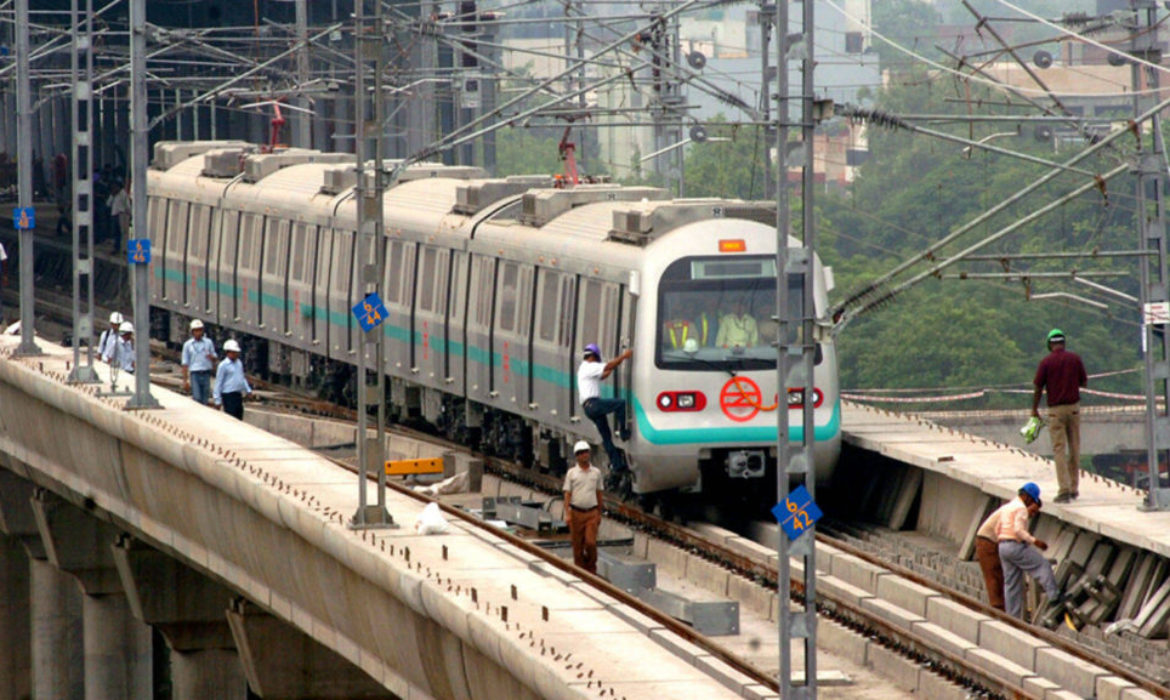
Those Candidates who had applied for the DMRC Recruitment for the post of Maintainer, JE/ Asst Manager / CRA, SC, and TO must check the DMRC Syllabus. So candidates should download the DMRC exam syllabus to qualify the exam in a better way. Along with the Delhi Metro Rail Corporation Ltd syllabus, aspirants can check the DMRC exam pattern for the posts of Maintainer, JE, Asst Manager, and CRA, SC/TO.
Delhi Metro Rail Exam Pattern & Selection Process:-
Executive Cadre Posts, the selection process will consist of 3 stages:
- Computer Based Test (Paper I & Paper-II)
- Group Discussion
- Personal Interview followed by Medical Examination
Non- Executive posts, the selection process will consist of 2 stages:
- Computer Based Test (Paper I & Paper-II)
- Medical
DMRC Exam Pattern for CBT
| Paper | Subjects | Questions | Time |
| Paper – I | General Awareness | 120 | 90 Minutes |
| General Intelligence & Reasoning | |||
| Quantitative Aptitude | |||
| Knowledge of your Discipline | |||
| Paper-II | English Language | 60 | 45 Minutes |
*(Paper-II is not for Maintainers posts)
- There will be a negative marking of 0.33 marks for every wrong answer.
- All candidates have to undergo the medical fitness test(s) and meet the medical standards prescribed by DMRC for various posts
- CBT will be bilingual (English & Hindi).
- You will be undergoing training for two years.
- The normalization method will be applicable for evaluating CBT results, where the CBT is held in more than one shift.
DMRC Syllabus – DMRC Paper I Exam Pattern
| S. No. | Name of the Subjects | No. of Question | Max Marks | Total Duration |
| 1. | General Awareness | 30 | 30 | 90 Mins |
| 2. | General Intelligence & Reasoning | 30 | 30 | |
| 3. | Quantitative Aptitude | 30 | 30 | |
| 4. | Technical Subjects | 30 | 30 | |
| Total | 120 | 120 | ||
DMRC Syllabus – DMRC Paper II Exam Pattern
| S.No | Type of Examination | Subject | Topic Names | Marks | Duration |
| 1. | Subjective Type | English | Paragraph Writing | 60 Marks | 45 Minutes |
| 2. | Comprehension | ||||
| 3. | Essay writing on Science & Technology |
Quick Preparation Tips using DMRC Syllabus:-
- Refer the latest DMRC Syllabus and Exam Pattern
- Later, read the DMRC Previous Papers so you can know the previous year’s paper format.
- Once you complete the topics mentioned in the DMRC Syllabus Pdf and Test Pattern, attend the mock test
- Concentrate on the topics that you lag of.
- Study 8 hours daily and note down the important formulas and memorize it.
Course Summary:-
Our new concept in teaching of Competition Classes is unique and flexible which ensure perfect retention of content involving purely psychological and scientific methods. It is entirely different from the traditional and stress full way of school/college type of learning.
- MXSII is an ISO 9001: 2015 & MSME certified company and it is approved by the Ministry of Corporate Affairs.
- Trainers give individual attention to learners regarding their doubts and queries.
- Improved course content leads to smart learning and ultimately successful completion of the course.
- It also grants short term courses to boost the learning of technology in a short duration.
- Flexibility is provided for an opting for batch dates. Batch dates once selected may be changed prior to 7 days of starting the batch.
- After being a part of MXSII Family, students will be provided 1 Year Membership Card through which the candidate can revise the same course with a large number of other benefits.
- Grants academic learning environment due to positive and intellectual discussions with the experts and peer group.
- We have specially trained faculty to help you through your tenure with MXSII.


